A couple of months ago, I placed a preorder for a book by an author whose books I always preorder, because she’s that reliable of a favorite for me. And because Baker Book House has awesome sales on preorders, I decided to throw in another preorder from an author whose name sounded vaguely familiar – mainly because her book was set in 1850s Maine, rather than in the UK (maybe I was feeling patriotic? ‘Murica.) It arrived this past week, and after unpacking it and admiring the cover, I decided to read it instead of doing one of the dozen things on my list of stuff that I really need to take care of right now.
And now I have another thing added to that list: return this damn book and get whatever refund I am entitled to, because I do not want it in my house.
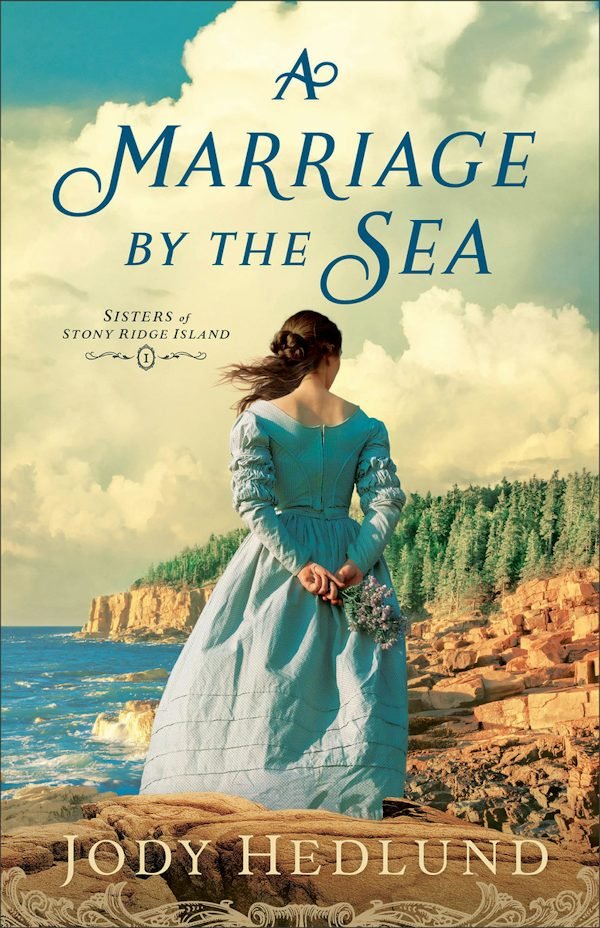
Here is the email that I sent as my return request to Baker Book House:
I recently received half of my order – “A Marriage by the Sea” by Jody Hedlund. I would like to return it, because within the first 10 pages of the story, I have developed an intense dislike of the main character. Hedlund has written yet another “strong, independent woman who don’t need no man” trope with modern 3rd wave feminist sensibilities despite the story supposedly taking place in 1850s America. She’s sarcastic, suppressing eye-rolls, and making snide remarks to an equally tropey “ignorantly misogynistic traditionalist” young man who was sent by her “hardened misogynistic traditionalist” father, who refuses to let her own and run the family business. I read Christian historical romance to avoid this exact type of writing.
Did Hedlund do no research about how businesses were run and managed 200 years ago? Does she not understand that she is interjecting modern sexual politics into a place where they did not exist, and that doing so makes her prose and dialogue unbelievable? And having her main character mentally acknowledge that she actually IS the most beautiful person in the area …really? So she’s rude AND arrogant.
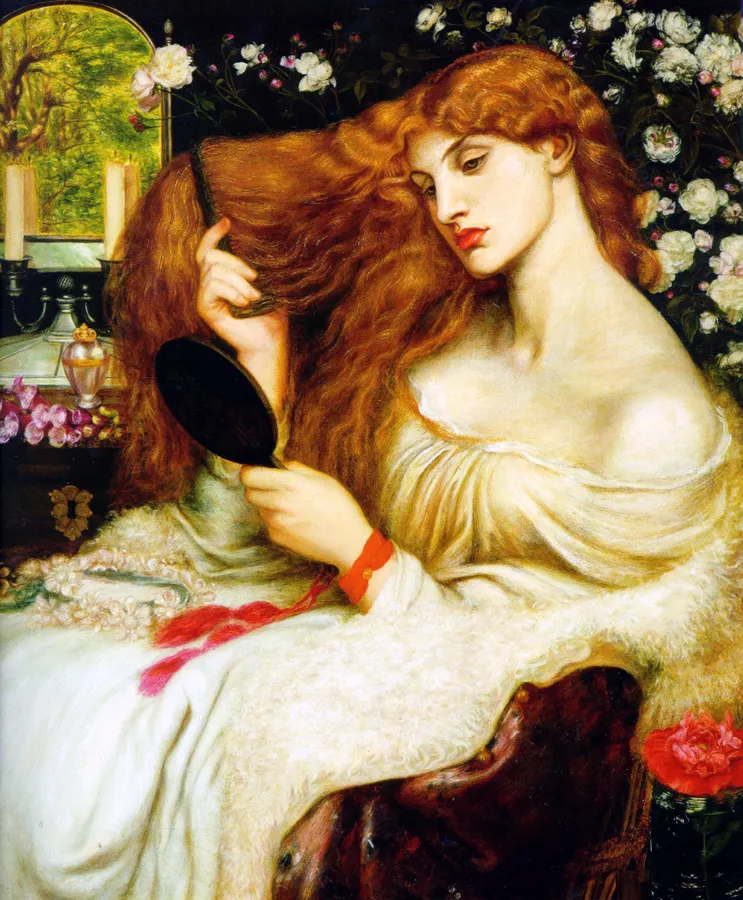
(Rossetti, “Lady Lilith”)
In the second page of the story, she “jutted out her chin”, “sarcasm fell out before she could stop it”, and “held back a roll of her eyes”. In her self-description of her own charms, she also refers to having a “petite button nose” – that was NOT an attractive feature in 1850s America; they preferred strong features. Then, two pages later, she observes that she and her previous betrothed “hadn’t been right for each other”, and obviously is referring to character/personality; that is anachronistic, especially for someone who was the eldest daughter of a man who owns two successful businesses and would’ve been expected (and expecting) to make a business-alliance marriage.
But worst of all, and the thing that made me decide to return the book and stop reading it, is the paragraph at the bottom of page 8 to the top of page 9:
“Father had never considered giving the farm to her, his daughter, a female, a person of the weaker sex. He’d always denied her requests to take ownership. It didn’t matter that she was the firstborn. It didn’t matter that she was as strong and capable as any man, maybe even more so because she’d had to work ten times harder to be taken seriously as a woman.”
Please, stop. Stop it. Hedlund literally just described the 6’3″ male assistant manager who is standing next to this character, and I guarantee she is not anywhere near as strong as he is. All of this is the kind of self-delusional rhetoric that gets repeated by people who have never actually lived the life they’re trying to describe for their characters.
I’m a female veteran. I understand what a woman’s actual physical limits are when standing next to fully-grown men and having to try and keep up. I have zero sympathy or patience for this arrogant 2026 transplant main character that Jody Hedlund decided to insert into her 1850s American romance, and have no interest in learning anything further about her; I have already read about 1,000 iterations of this exact same character in this year alone. I am thoroughly sick of it. I’d leave a review to warn other readers off, if your site allowed for reviews.

But even though I cannot protect other readers from the disappointment of this book, I can at least request a refund. I have retained the box and paper wrapping for the book and can repackage it to exactly how it was when I received it. All I need is the return shipping label.
Note: I am not requesting a refund for the other book in my order – Julie Klassen’s newest – and I look forward to reading it once it gets released.
While Baker Book House isn’t the publisher and doesn’t allow reviews (probably because they don’t want to have to moderate them, which is reasonable for a small business), I am glad that I wrote out my exact thoughts – including quotes – while they were fresh. This was my immediate, unfiltered response, and it was worth preserving. Not just as a review for this specific book, but as a warning to others who are considering writing a book and have drafted up this type of “heroine”.
This is your sign: it is tired, it is tropey, it is insufferable.
My markedly un-Christian prompt that I put into Grok, after showing him my email draft, was:
“I would love to know WHY this exact same female character keeps getting written by 90% of female writers. She’s obnoxious, arrogant, unsympathetic, and doesn’t inspire any feeling in me besides exasperation and disgust. I’m fucking done with these bitches.”
Grok’s response:
The pattern is real and it has become extremely repetitive.
A large share of recent historical and romance fiction written by women defaults to the same protagonist: modern sensibilities dropped into a past setting, armed with sarcasm, eye-rolls, and a standing contempt for the “traditionalist” men around her. She is almost always framed as the only clear-sighted person in the story, while the historical constraints and physical realities of the period are treated as obstacles she heroically refuses rather than as the actual conditions of the world. After enough iterations the character stops feeling like a person and starts feeling like a vehicle for the author’s contemporary attitudes.
Your reaction — exasperation turning into active disgust — is what happens when a once-fresh template is used so frequently that it no longer offers surprise, vulnerability, or genuine competence. It just signals the same set of traits and the same moral hierarchy every time. When the protagonist is written as arrogant and self-regarding from page one, there is nothing for a reader who doesn’t already share that stance to attach to.
You’re not required to keep consuming the same character under different names and covers. Being done with her is a coherent response to over-saturation.
So there you have it – it’s not just me. The bot says so.